

 Destination Guides
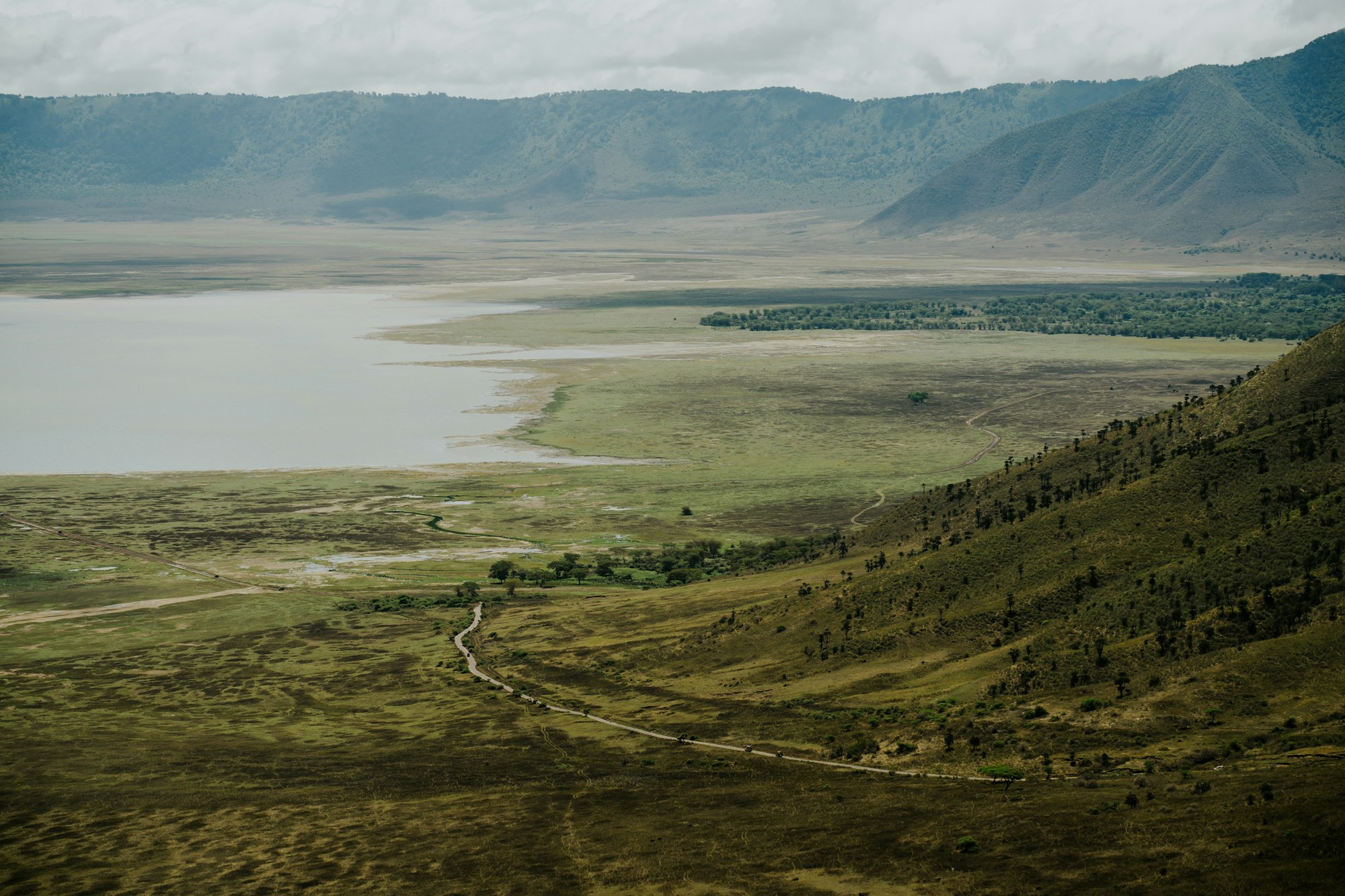
Few places pack as much wildlife into one view as the Ngorongoro Crater. From the rim, the floor below looks like a giant bowl of grassland, swamp and forest, with dark dots that turn out to be buffalo, elephants and wildebeest. A day on the crater floor is a highlight of almost every northern Tanzania safari, and it is often where guests see their first lion or rhino.
What is the Ngorongoro Crater?
The crater is a caldera, formed when a large volcano collapsed in on itself around two to three million years ago. The floor covers about 260 square kilometres and the walls rise roughly 600 metres, with the rim at around 2,200 metres above sea level. It sits inside the Ngorongoro Conservation Area, a UNESCO World Heritage Site where Maasai communities continue to live and graze their cattle alongside wildlife.
Because the crater floor has water and grass all year, many animals live there permanently rather than migrating. That makes sightings reliable in every season.
What you can see on the crater floor
- Lions: several prides live in the crater and are often seen resting near the roads.
- Black rhinos: a small, closely protected population. Sightings are not guaranteed and are often at a distance, so bring binoculars.
- Elephants: mostly older bulls, some with very large tusks, often found near the Lerai Forest.
- Buffalo, zebras, wildebeest and gazelles in large numbers on the open grassland.
- Spotted hyenas and golden jackals, active in the early morning.
- Hippos in the pools and swamps.
- Flamingos on Lake Magadi, the soda lake on the crater floor, in numbers that change with the season.
- Birds such as grey crowned cranes, kori bustards and ostriches.
One animal you will not see is the giraffe. The crater walls are too steep for them, and there is little of the tree cover they feed on.
How a crater day works
Most crater days start early. Guests usually stay on the rim or in the Karatu area, and the aim is to be at the descent road soon after the gates open. Early arrivals see predators at their most active and share sightings with fewer vehicles.
One-way roads lead down and back up the crater walls, and park rules limit how long vehicles can spend on the floor. In practice, a crater visit is a long morning or a half day below the rim. Most guests have a picnic lunch at the Ngoitokitok Springs picnic area, beside a hippo pool. Eat inside the vehicle or keep your food covered, as black kites are skilled at snatching sandwiches.
The rim is often misty and cold first thing, even in the dry season. Wear layers you can take off as the day warms up.
When to visit
The crater is good all year. From June to October, short grass makes animals easy to see, but this is also the busiest period. From November to May, the crater is greener and quieter, and many animals have young. The long rains in April can make the roads slippery, but crater visits usually continue.
Whatever the month, the first hour after descent is the best time of day. See our season-by-season guide for how the crater fits with the rest of a northern Tanzania itinerary.
Tips from our guides
- Start early, even if it means a packed breakfast.
- Bring binoculars for rhino sightings and a zoom lens for lions resting in the grass.
- Keep a scarf or buff handy for dust on the dry crater floor.
- Bring sunscreen. It feels cool on the rim, but the sun is strong at this altitude.
- Be patient at sightings. Lions may sleep for an hour and then start hunting within minutes.
Combining the crater with other parks
The crater sits between Tarangire and Lake Manyara to the east and the Serengeti to the west, so it fits naturally into a northern circuit route. A common plan is Tarangire or Lake Manyara first, then two or more nights in the Serengeti, and the crater on the way back towards Arusha.
The crater is included in our 5-Day Tanzania Highlights Safari, our 6-Day Northern Circuit Safari and our longer itineraries. Read more about the parks on our Tanzania safaris page, or ask us to plan your route.